Thursday, March 6, 2014
Garden Close Up The Legend of the Dragonfly
I started to do some research on the legend of the dragonfly and found that there is indeed a legend....a story to be told that is quite fascinating. Dragonflies have been around for millions of years and were one of the first insects. The family that the dragonfly belongs to, Odonata, is believed to have been related to the Damselflies and the myth states that the Dragonflies were once Dragons. These creatures had measured over two feet in length at the time and although they have shrunken down in size their appearance and function has remained the same.
Dragonflies have been welcomed in the garden for years since they are carnivores and feast on garden pests such as mosquitoes, flies, gnats and aphids, thus making them beneficial insects. An interesting fact about dragonflies is that most need light in order to fly and will land briefly even if a cloud goes by. The dragonfly exhibits iridescence on its body and both wings. Iridescence is the ability of colors to change based on the reflection and refraction of light which puts on a show of color magic as they fly through the air. Dragonflies are water creatures in the first stage of their life then emerge to land as adults. The adult lifespan is short, only long enough to reproduce then they die off when winter arrives. The following year the cycle begins again when the offspring emerge. Dragonflies are often attracted to pools, ponds or other bodies of water. I often watch as they dance around the pool and delicately balance on the tips of taller flowers in the garden.
Now onto the legend of the dragonfly. In most cultures dragonflies are followed with many superstitions. The dragonfly symbolizes growing, changing and sense of self. Old folklore states that if a dragonfly lands on you it is a sign that you will hear good news from someone dear and the sight of a dead dragonfly symbolizes sad news. In Japanese paintings they are the symbol for new light and joy, happiness, courage and strength. In European culture the dragonfly was given the name of "Devils Darning Needle" because of a superstition that the dragonfly would sew shut the mouths of lying children while they slept. The Swedish name for dragonfly is trollslanda, which means "hobgoblin fly" or "goblin fly" in English. In Swedish culture it was believed that hoggoblins, elves and brownies would live in the woods and that dragonflies were considered to be the hobgoblins twisting tools. To the Chinese the dragonfly is a symbol of summer but also a symbol of instability and feebleness.
While in some cultures dragonflies are called the witches or devils animals they are honored in others. Some people believe that the dragonfly symbolizes emotional and passionate early years of life and balance and clarity with age. There is an expression of mental and emotional stability as one matures. Dragonfly symbolism combines somewhat with that of a butterfly and change. The iridescence or reflective property of the wings and body symbolizes a clear vision to the realities of life and self-discovery and a loss of inhibitions. The dragonfly symbolizes growth over past self-created illusions that hold back our progression. It represents a sense of self that comes with age and maturity and clarity of the deeper meaning of life.
There are numerous superstitions, myths and beliefs about the dragonfly. Next time you encounter one in your garden think of not only the benefits but also all the legend that follows this mysterious creature. Gaze upon the dragonfly, unravel its mystery and jump into a world of imagination!
As Always~ Happy Gardening!
Author: Lee @ A Guide To Northeastern Gardening Copyright 2011. All Rights Reserved.

Design Software Can Make Pool Landscaping Easy

The instant most of the people begin their swimming pool Landscaping Design; they just dont understand the magnitude of the work they are carrying out. Quickly, their general estimates in relation to materials needed, costs, and effort needed prove to be entirely incorrect, in the end making the total ordeal frustrating. You could ensure your pool Landscaping task does not come to be victim to that mishap with landscape layout Software.
Measure Twice, Cut Once
When youre planning your swimming pool Landscaping project, you wont have to measure at all with Landscaping Design Software. There is its most significant advantage. Simply by using a computer to perform all the calculations which arent at risk from human error, and much more quickly, it will save you time whilst getting extremely accurate calculations of area in a given area and how each of the elements of your project come together. By using Landscaping Design Software, you will not out of the blue find that you had made a slip-up and your gravel walkway will be cutting into your flower bed or some project halting error.
Pool Landscaping Design Software can help you layout your project with lots of other useful tools. With beautiful image previews, you will see just how your project will look once finished before you have even begun working away at it. Some Software even includes a 3D view so that you can turn the scene to observe it from a number of perspectives.
Perhaps this tool is easily the most effective at making your Landscaping project precisely what you would like it to be. But who said ones swimming pool Landscaping Design Software couldnt show you plants and other life? If you plan to create a fish pond in your garden, itll also display fish swimming. Quite a few come with vegetation encyclopedias so youre able to further ensure that your flora choices are perfect for your environment.
Spend your hard-earned money prudently
Surely, you wont want to be paying out tons of money just for landscape Design Software. You can get this kind of Software as inexpensively as $ 20, together with a little searching about online; youll find freeware along with shareware versions of the computer Software. However, one does get what you pay for, plus the most complete Design Software program can cost you 50 or even 60 bucks, but if you have a look at their advanced tools and features, youll find that it would be money spent well.
If youre thinking about renovating the back garden, make sure you check out landscape Design Software. It may enable you save money, and youll get the best idea of what the project will look like once completed. A plant encyclopedia will make sure that any plants you purchase are ideal for your local climate, plus overall, landscape Design Software can help your pool Landscaping project go as effortlessly as possible.
Pool Landscaping can be fun if you have the right guidance and knowledge. On our informative site you will find photos and Design ideas to help you plan and landscape your yard and swimming pool area. Lets get our hands dirty! Pool Landscaping
Wednesday, March 5, 2014
Kalimeris Japanese Aster
Heat tolerant and generally hardy zones 4 to 8, these ornamental Aster relatives tend to bloom more in the summer than in the fall. The foliage is generally around 4 inches in length. The flowers attract both butterflies and hummingbirds.
Prefers full sun to partial shade.
Kalimeris incisa
Reaches up to 5 feet in height with almost white to lilac colored, daisy-like flowers up to 1.5 inches in width borne in clusters.
The tapered leaves are deep green.
Loves heat and humidity, and tolerates both drought and wet soil.
* photo taken on June 23 2013 @ U.S. National Arboretum, DC

Blue Star
A compact perennial reaching up to 2 x 3 + ( rarely over 1.5 ) feet. The pale blue flowers are borne from June through October. It can be used in the place of summer bedding annuals, as it usually blooms over an extremely long period lasting up to 4 months.

* photo taken on 4th of July 2010 @ U.S. Natioanal Arboretum, D.C.

* photos taken on June 28 2011 in Ellicott City, MD


* photos taken on July 13 2011 in Columbia, MD


* photo taken on Aug 10 2011 in Ellicott City, MD

* photos taken on June 20 2012 in Columbia, MD
* photos taken on Aug 18 2013 in Columbia, MD


Variegata
Uprihgt in habit, reaching up to 2.5 x 3 feet and spreads rapidly by creeping stems.
The foliage is variegated with cream. The very abundant flowers are blue.
Kalimeris integrifolia
A bushy perennial up to 3 feet in height. Smothered with small, white, daisy like flowers all summer long.
Kalimeris mongolica
Also called Asteromea mongolica. A fast growing perennial, reaching up to 3 x 2.5 feet with very abundant, double, white flowers borne for 3 months of more during mid-summer to mid-autumn. It often bears over 100 flowers at a time.
The leaves are pinnately-lobed.
Hardy zones 4 to 8 in full sun to partial shade on just about any well drained soil. Drought, humidity and very heat tolerant, it is great for parking lot islands.
* photo taken on Sep 23 2013 in Burtonsville, MD

Kalimeris pinnatifida ( Mongolian Aster )
Native to Japan and reaching up to 5 x 3 feet. The foliage, up to 4 inches in length is narrow and serrated.
The very abundant small, semi double flowers are borne all summer long.
It reblooms if cut back.
Hardy zones 3b to 8, thriving in most of the U.S.
Hortensis
Also called Kalimiris mongolica.
Kalimeris yomena
Hardy zones 5 to 8 in full sun to partial shade.
* photo taken on October 17 2010 @ U.S. National Arboretum, D.C.

Aurea
Reaches up to 3 x 2 ( rarely over 1.5 ) feet with potential of being invasive on some sites.
The deeply-cut leaves, up to 1.5 inches in length, are green and variegated with a wide, cream or bright yellow colored margin.
The light lavender flowers are Aster like and borne in early autumn.
* photo taken on Sep 27 2011 in Columbia, MD

* photos taken on June 23 2013 @ U.S. National Arboretum, DC


Read More..
Prefers full sun to partial shade.
Kalimeris incisa
Reaches up to 5 feet in height with almost white to lilac colored, daisy-like flowers up to 1.5 inches in width borne in clusters.
The tapered leaves are deep green.
Loves heat and humidity, and tolerates both drought and wet soil.
* photo taken on June 23 2013 @ U.S. National Arboretum, DC
Blue Star
A compact perennial reaching up to 2 x 3 + ( rarely over 1.5 ) feet. The pale blue flowers are borne from June through October. It can be used in the place of summer bedding annuals, as it usually blooms over an extremely long period lasting up to 4 months.
* photo taken on 4th of July 2010 @ U.S. Natioanal Arboretum, D.C.
* photos taken on June 28 2011 in Ellicott City, MD
* photos taken on July 13 2011 in Columbia, MD
* photo taken on Aug 10 2011 in Ellicott City, MD
* photos taken on June 20 2012 in Columbia, MD
* photos taken on Aug 18 2013 in Columbia, MD
Variegata
Uprihgt in habit, reaching up to 2.5 x 3 feet and spreads rapidly by creeping stems.
The foliage is variegated with cream. The very abundant flowers are blue.
Kalimeris integrifolia
A bushy perennial up to 3 feet in height. Smothered with small, white, daisy like flowers all summer long.
Kalimeris mongolica
Also called Asteromea mongolica. A fast growing perennial, reaching up to 3 x 2.5 feet with very abundant, double, white flowers borne for 3 months of more during mid-summer to mid-autumn. It often bears over 100 flowers at a time.
The leaves are pinnately-lobed.
Hardy zones 4 to 8 in full sun to partial shade on just about any well drained soil. Drought, humidity and very heat tolerant, it is great for parking lot islands.
* photo taken on Sep 23 2013 in Burtonsville, MD
Kalimeris pinnatifida ( Mongolian Aster )
Native to Japan and reaching up to 5 x 3 feet. The foliage, up to 4 inches in length is narrow and serrated.
The very abundant small, semi double flowers are borne all summer long.
It reblooms if cut back.
Hardy zones 3b to 8, thriving in most of the U.S.
Hortensis
Also called Kalimiris mongolica.
Kalimeris yomena
Hardy zones 5 to 8 in full sun to partial shade.
* photo taken on October 17 2010 @ U.S. National Arboretum, D.C.
Aurea
Reaches up to 3 x 2 ( rarely over 1.5 ) feet with potential of being invasive on some sites.
The deeply-cut leaves, up to 1.5 inches in length, are green and variegated with a wide, cream or bright yellow colored margin.
The light lavender flowers are Aster like and borne in early autumn.
* photo taken on Sep 27 2011 in Columbia, MD
* photos taken on June 23 2013 @ U.S. National Arboretum, DC
Sissinghurst Place
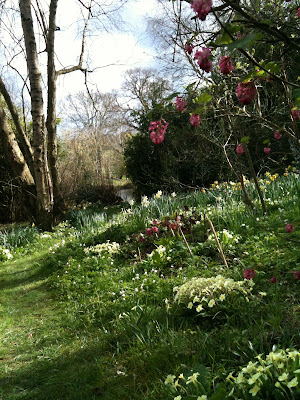
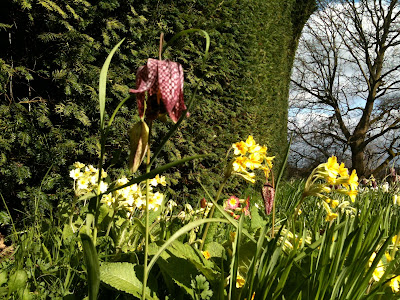
A few patches of sun this afternoon allowed a visit to Sissinghurst Place, open for charity under the National Garden Scheme. The kindly owner greeted us in his deliciously battered panama with the words You do know youre not at Sissinghurst Castle dont you?.


 The Easter lambs were again gambolling happily in the field beyond the haha today, the hedges and woodland walks allowing frequent views out into the Kent countryside.

 For details of this and other gardens open for charity by very generous owners, please follow this link:
http://www.ngs.org.uk/
Read More..
We did and were allowed through what would once have been the entrance to a very grand house, but now houses a swimming pool amongst ruined walls.
A fire in 1948 gutted the main house, leaving the owners to live, as our host put it: In the Servants Wing, but without the servants. Vita Sackville-West apparently watched the fire and used it in her writing of The Easter Party.
The Easter lambs were again gambolling happily in the field beyond the haha today, the hedges and woodland walks allowing frequent views out into the Kent countryside.The gardens were a delightful mixture of formal structure and less formal shrubberies and bulbs planted into long grass, which Julie explained are gradually replacing the more time-consuming beds and fiddly mowing areas.
The atmosphere of old world charm and elegance was only momentarily dented by my asking permission to include photographs of the garden in my blog. They graciously agreed but for a moment I felt as though I had arrived from outer space!
http://www.ngs.org.uk/
Things I really hate 3 White Rocks
If an Englishman’s home is his castle, then his lawn is something very precious indeed. I’d imagine that a lawn equivalent that you actually keep in a castle would have to be something like a virginal damsel with one of those pointy hats. Hence you wouldn’t want the local riff raff getting their grubby mitts on either your fair maiden or your closely, cropped turf.
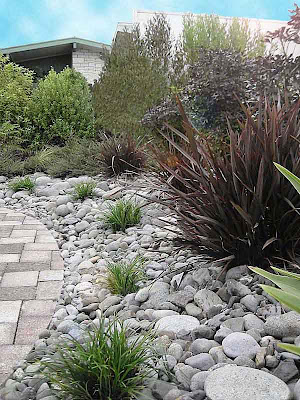
Stretching this tenuous metaphor to it’s very limit is the only way I can explain why some people choose to ‘protect’ the verge outside their house with big white rocks. They are the crenellated, outer bailey wall of today’s semi-detached, dorma bungalow. I hate them.


I took these photo’s whilst on a site visit to a plot adjacent to this narrow drive (generally the less said the better). The problem being that it was so narrow that you couldn’t stop without blocking access to the rest of it. Shame you can’t park up on the verge…
First of all I think this looks a mess. But I also think it’s laying claim to something that is owned by everyone and not just yourself, i.e. the highway verge. It’s akin to people leaving nasty notes on your car when you park outside their, and I’m pleased to hear that some Councils are starting to take action against it.
Tuesday, March 4, 2014
Coccothrinax
Coccothrinax
* page under construction....completed Jan 10 2012
Coccothrinax barbadensis
A fast growing Palm hardy north to zone 8 and reaching up to 50 feet in height and 15 feet in crown width.
Read More..
* page under construction....completed Jan 10 2012
Coccothrinax barbadensis
A fast growing Palm hardy north to zone 8 and reaching up to 50 feet in height and 15 feet in crown width.
Subscribe to:
Posts (Atom)